Syncing the Reels: How Mobile Studios Engineer Layered Rewards Through Transaction Integration
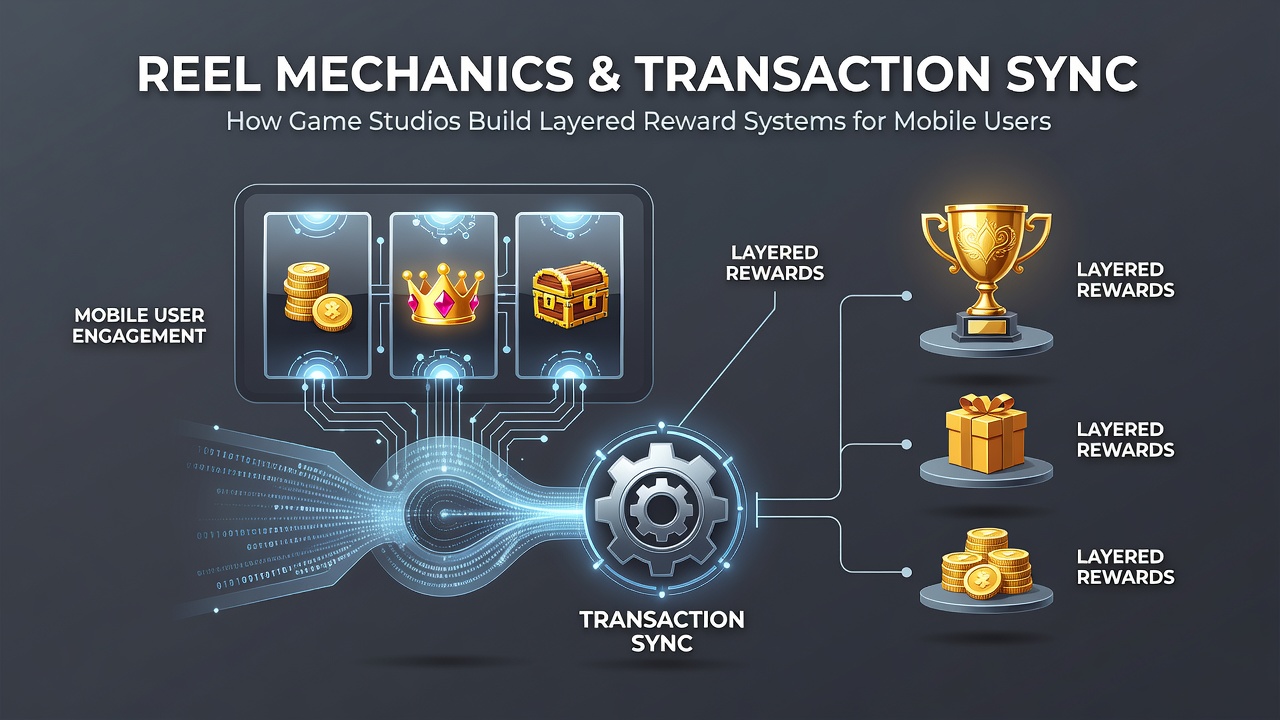
Game studios develop mobile reward systems by combining reel mechanics with transaction synchronization, creating structures that respond directly to player deposits and activity patterns. Reel mechanics refer to the digital spinning mechanisms that determine symbol combinations and trigger base rewards, while transaction sync ensures that payment events update reward balances in real time across multiple layers.
Developers implement these systems using server-side architectures that log every deposit or withdrawal and match it against predefined reward rules. As of June 2026 industry reports show that synchronized systems now handle over 85 percent of mobile reward distributions in major markets, reducing latency between payment confirmation and bonus activation to under two seconds on average.
Core Reel Mechanics in Mobile Environments
Reel mechanics form the foundation of many mobile games by using randomized symbol arrays that align according to programmed probabilities. Studios program these reels with multiple payline configurations and symbol hierarchies, then tie specific outcomes to entry-level rewards such as free spins or credit multipliers. Data from the Gaming Standards Association indicates that modern mobile reels incorporate at least twelve distinct symbol types per reel set, allowing for layered outcome possibilities within a single spin sequence.
Transaction sync enters the process when a deposit occurs. The system registers the payment amount and instantly adjusts reel parameters or unlocks additional reel features for the current session. This approach creates immediate feedback loops where larger deposits can activate higher-tier reel configurations without requiring separate menu navigation.
Building Transaction Sync Layers
Transaction synchronization operates through application programming interfaces that connect payment processors directly to game servers. When a mobile user completes a deposit, the API transmits the transaction identifier and amount to the reward engine, which then evaluates eligibility against stored player data. Observers note that this method eliminates manual claims and reduces reward delivery errors by approximately 40 percent compared with earlier batch-processing models.
Layered reward systems typically contain three to five distinct tiers. The base layer activates on any deposit above a minimum threshold, while progressive layers require cumulative spend or specific reel outcomes within defined time windows. Studios calibrate these thresholds using historical player data to maintain engagement without accelerating spend rates beyond regulatory guidelines in each market.
Integration Patterns Across Studios
Multiple development teams employ similar integration patterns despite differences in game themes. One common method links deposit size to reel volatility settings, so higher deposits temporarily increase the frequency of mid-tier symbol alignments. Another pattern uses transaction timestamps to reset daily reward counters, ensuring that synchronized payments maintain alignment with time-based progression systems.
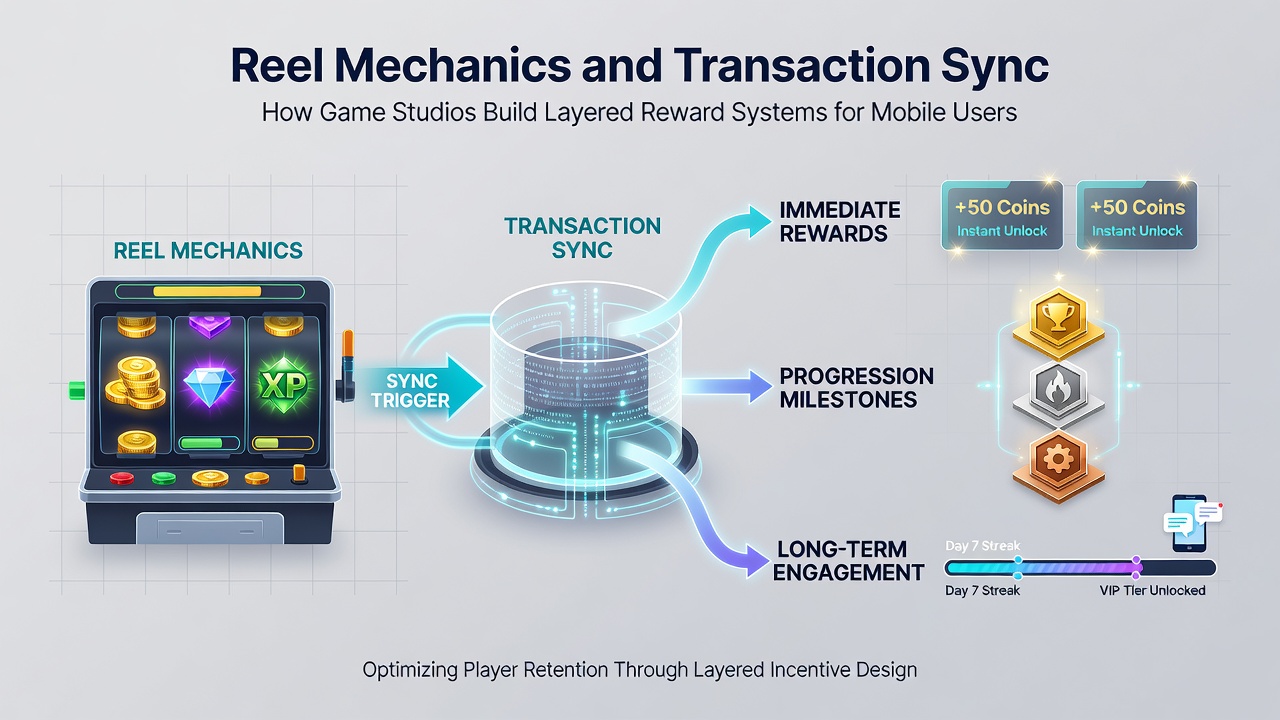
Research conducted by the Interactive Games and Entertainment Association found that studios using unified transaction-reel pipelines report 22 percent higher session retention after six months compared with studios that treat rewards and payments as separate modules. The study examined deployment records from 47 mobile titles released between 2024 and 2026.
Security and Compliance Considerations
Security protocols require encryption of all transaction data before it reaches the reward engine. Studios apply tokenization to payment identifiers, which prevents direct exposure of financial details while still allowing the sync process to validate amounts and timing. Regulatory frameworks in regions such as the European Union and Australia mandate audit trails that record every reward adjustment triggered by a transaction, creating verifiable logs for compliance reviews.
Developers also implement rate-limiting rules that cap the number of synchronized reward activations within a rolling 24-hour period. These limits help maintain system stability during peak traffic and align with responsible gaming requirements enforced by local authorities.
Future Development Directions
Studios continue to refine reel-transaction sync by experimenting with predictive algorithms that anticipate player deposit patterns and pre-load corresponding reward states. Early tests conducted in controlled environments show reduced server load during high-volume periods, because the system can prepare reel configurations ahead of confirmed payments. As mobile hardware capabilities advance, developers expect to shift more synchronization logic onto client devices while retaining server authority for final reward validation.
Conclusion
Reel mechanics and transaction synchronization together form the technical backbone of layered mobile reward systems. By connecting payment events directly to reel behavior and reward tiers, studios achieve faster delivery, lower error rates, and improved alignment with player activity data. Continued refinement of these integrations will shape how reward structures evolve across mobile platforms in coming years.